
Roof installed
A protective canopy with a restrained champagne-gold Flower of Life detail held within the material—not applied as a decal.

GOODHELM → ZARA → TERRA → ONE → BRIGHT
Goodhelm Bright is the founding open-roof demonstrator for GOODHELM ZARA Terra · One: pearl-white fire-opal materiality, sovereign grand performance, and a private commission program governed by engineering truth.
Program state Terra · One trim · Concept only
Vehicle architecture
Bright begins with proportion, stillness, and purpose. Its long grand-touring axis, open-roof hospitality, restrained aerodynamic surfaces, and calm visual command are design intentions—not performance claims. Every layer must be modeled, tested, independently reviewed, and either validated or revised before becoming a specification.
Exterior philosophy
A low monolithic volume, a generous wheelbase, a clear horizon line, and light used as orientation rather than decoration. Bright should appear powerful at rest: its visual energy held in proportion, surface continuity, and road presence rather than aggression.
Grand-performance proportion without a racing posture.
Visibility, access, luggage, and occupant dignity shape the package.
Every surface returns through contact, cooling, clearance, and service.
Open architecture
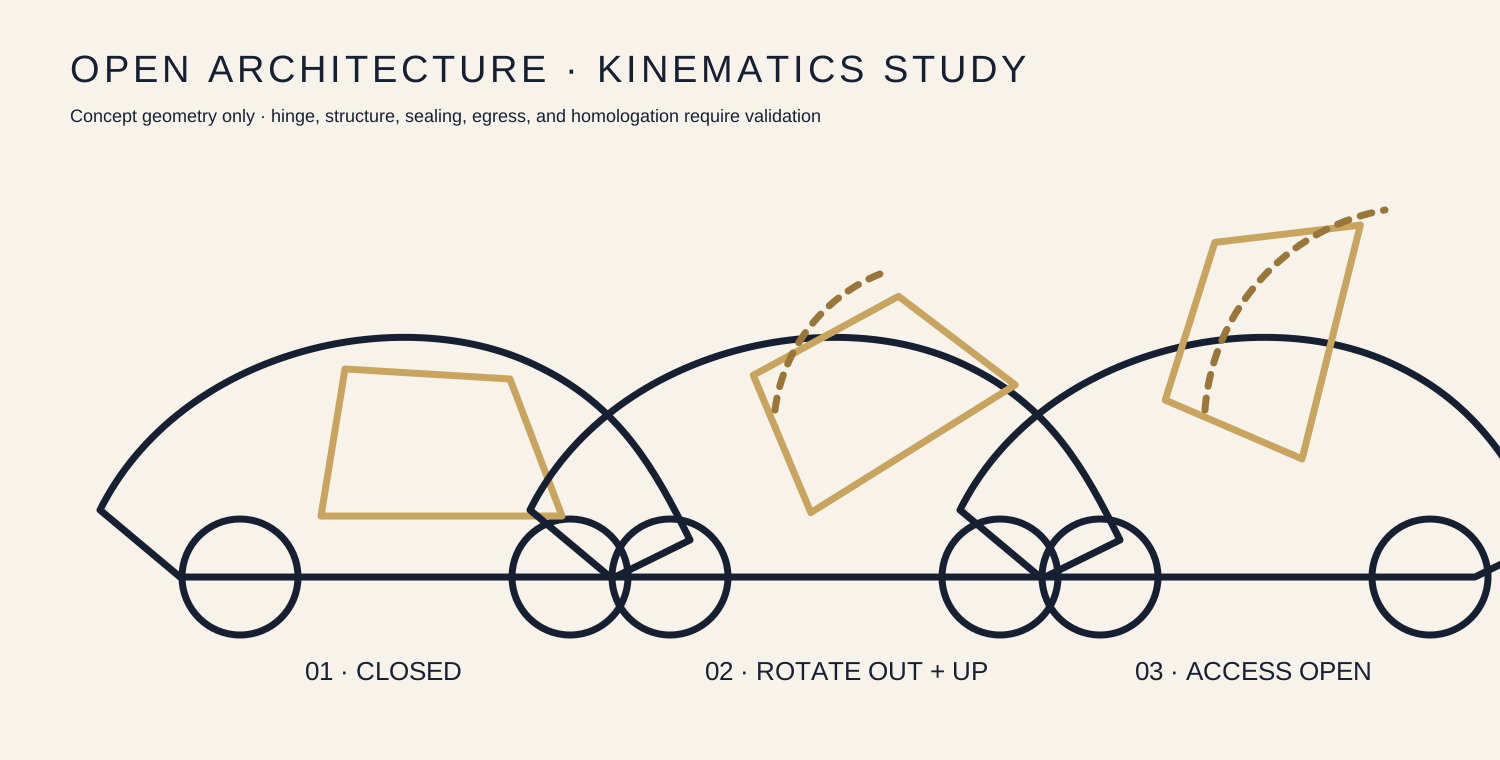
The open-roof study transforms Bright from an enclosed performance object into a vessel of arrival, hospitality, and shared passage. Door movement, roof storage, sealing, rollover protection, structural stiffness, egress, weather management, and service access remain engineering questions requiring validation.
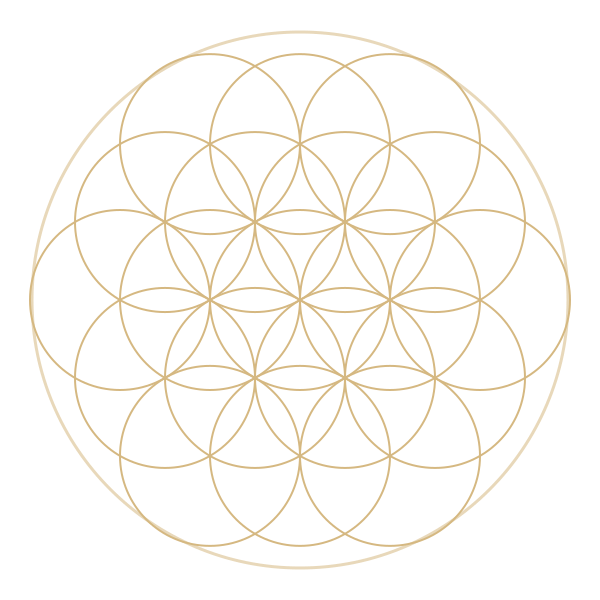
A protective canopy with a restrained champagne-gold Flower of Life detail held within the material—not applied as a decal.
Packaging, lift path, seals, mass, and operator effort require physical validation.
The canopy pattern departs with the panel; it never floats across the exposed cabin.
Storage volume, retention, drainage, luggage consequence, and crash behavior remain unresolved.
Open-roof and door-kinematics study · Mechanism subject to engineering validation
Interior light-temple
A warm-ivory and white-gold cabin concept with focused physical controls, restorative material tactility, unobstructed sightlines, and a calm operational hierarchy. Symbolic interfaces may orient attention; certified systems retain exclusive authority over propulsion, braking, steering, restraint, and safety-critical functions.
Glazing, pillars, mirrors, displays, and the open-roof boundary must preserve clear perception.
Certified systems retain propulsion, braking, steering, restraint, and every safety-critical function.
Ingress, egress, reach, comfort, storage, ventilation, and accessibility govern the cabin architecture.
Crozier and materiality
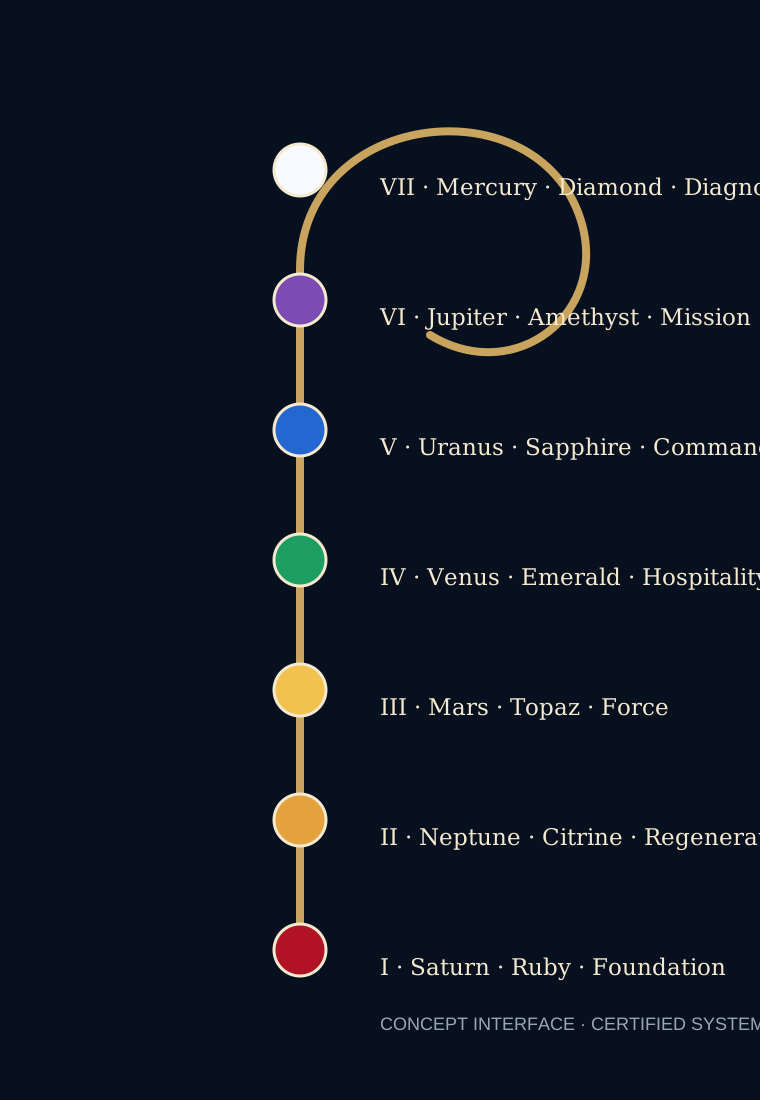
The Crozier is integrated as architecture rather than applied jewelry: a restrained exterior trace, a tactile cabin spine, and a non-safety-critical digital orientation layer.
Canonical finish
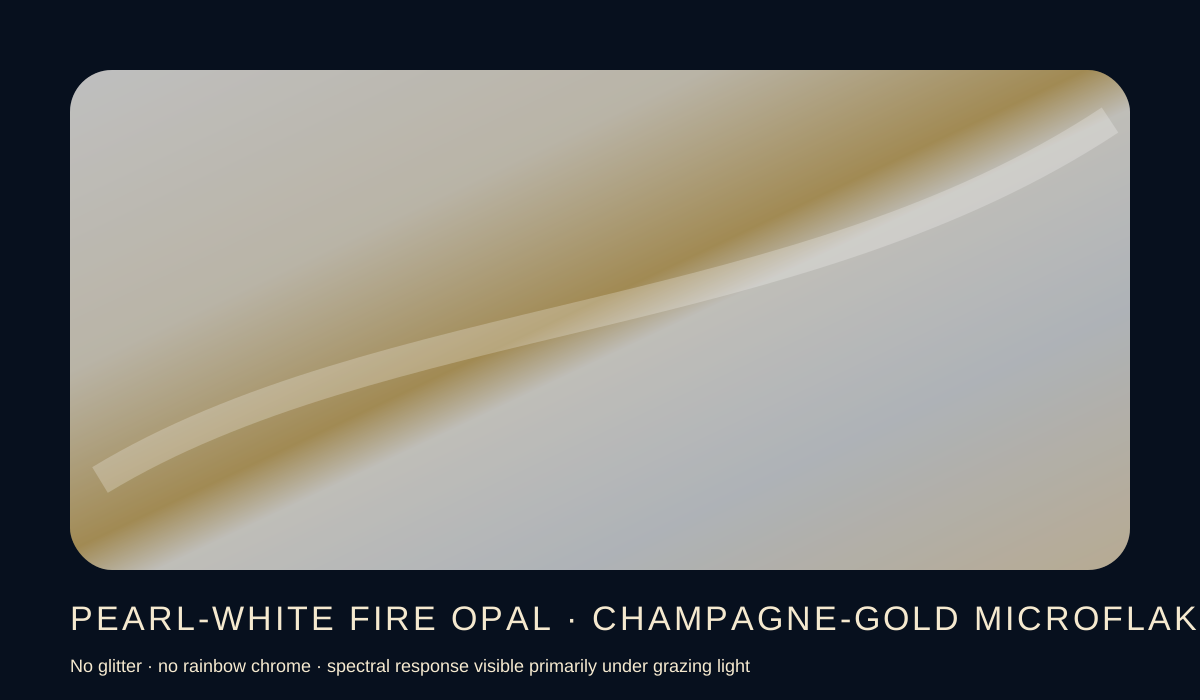
A ceramic pearl-white base with microscopic champagne-gold flake and restrained spectral depth visible mainly under grazing light—never glitter or rainbow chrome.
Governor line
Symbolic or coherence interfaces cannot authorize or override propulsion, braking, steering, stability, restraint, emergency response, or any other safety-critical function.

The Field Before Form
The toroidal field image remains the canonical conceptual plate for Bright. It belongs after the physical vehicle studies, where it can disclose the ordering geometry without being mistaken for product evidence.
Engineering ledger
Public status distinguishes concept intent from engineering evidence and makes each unresolved program condition visible.
| Domain | Current public status |
|---|---|
| Vehicle package | Concept study |
| Seating architecture | Four-place intent; packaging to be fixed |
| Roof mechanism | Packaging and structural study required |
| Door kinematics | Concept geometry; validation required |
| Propulsion | Architecture selection required |
| Battery and thermal | Modeling and supplier study required |
| Aerodynamics | CFD and physical correlation required |
| Structure and crash | Engineering partner and test program required |
| Controls | Safety architecture not yet specified |
| Homologation | Jurisdiction not selected |
| Manufacturing route | Partner study required |
| Material finish | Sample-development stage |
| Delivery | No production commitment |
Commission sequence
Progression is gated. Concept language never becomes a performance, safety, delivery, or certification claim until the relevant work is complete.
Establish intended use, patron fit, confidentiality, program status, and whether the inquiry belongs to design study, prototype sponsorship, technical partnership, or future commission formation.
Define occupants, journey types, climate, roads, luggage, accessibility, hospitality, service purpose, and desired material atmosphere.
Approve the governing proportion, finish, cabin architecture, Crozier treatment, intellectual-property boundaries, evidence standard, and change-control process.
Evaluate packaging, structure, crash strategy, thermal systems, aerodynamics, propulsion architecture, controls, manufacturing route, regulatory pathway, and serviceability.
Proceed through digital packaging, scale studies, ergonomic bucks, subsystem rigs, dynamic prototypes, independent review, documented testing, and correction.
Proceed only when applicable engineering, supplier, manufacturing, homologation, training, maintenance, documentation, and lifecycle conditions are resolved.

Service return
Bright is not completed by possession. Its final measure is the dignity, access, mentorship, hospitality, and practical service it makes possible. Through Supercars for Christ, disciplined performance becomes an occasion for encounter, formation, generosity, and return.